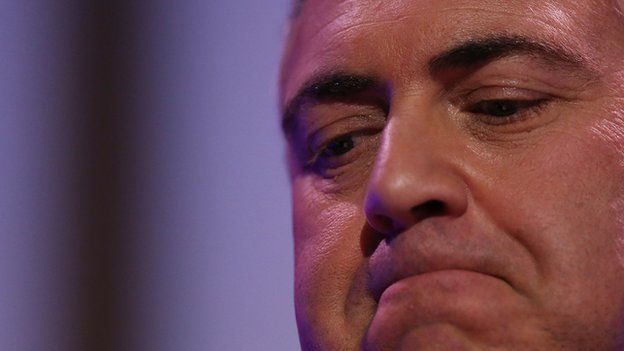
Hockey will attend the Articles of Agreement signing ceremony in Beijing next week next.
In October 2014, representatives of 21 Asian nations convened in Beijing to inaugurate the AIIB, which is focused on providing funding to infrastructure projects within Asia.
Analysts expect China, which will have veto power in AIIB - as decision-making requires at least 75% of the votes - to significantly enhance its influence in the region through the new bank.
The Union cabinet is likely to give a formal approval to a proposal on Wednesday for India to join the China-backed Asian Infrastructure Investment Bank (AIIB), in which it will be the second largest shareholder. All relevant issues like membership, capitalisation, voting rights of all member countries and management of the bank will be defined in the AoA.
Hockey said in a joint statement with Foreign Minister Julie Bishop that Australia will contribute about A$930 million (about US$718 million) over five years, becoming the sixth biggest shareholder in the infrastructure development bank with 57 prospective founding members.
“We are absolutely satisfied that the governance arrangements now in place will ensure that there is appropriate transparency and accountability in the bank”, he told broadcaster Sky News. The USA and Japan have stayed out of the institution.
Mr. Hockey said he had spoken with US Treasury Secretary Jack Lew this week, and reached out to representatives of the Japanese government to address their concerns. “It is a significant opportunity for Australia”, he said. “They understood exactly where we were coming from”, said Mr. Hockey of the USA reaction to Australia’s decision.
According to official statement, there was an estimated infrastructure financing gap of around Dollars 8 trillion in the Asian region over the current decade. It is expected to have initial capital of close to US$100 billion to invest in infrastructure projects.
Australia joins the likes of New Zealand, the United Kingdom, France, Germany and Italy.